Automation is often associated with high-volume manufacturing: thousands of identical parts, dedicated production lines, and equipment designed to repeat the same operation as quickly as possible. But wire processing does not always work that way.
Across industrial automation, automotive, energy, medical, military, and other manufacturing environments, production requirements can change frequently. Wire sizes, lengths, ferrules, terminals, labels, and specifications may vary from one job or batch to the next.
For manufacturers working in these high-mix, low-volume environments, the question is not necessarily whether to automate. It is where automation makes sense.
The right approach can reduce repetitive manual work, improve consistency, and increase throughput without sacrificing the flexibility that variable production requires.
Find the Time Hidden in Every Wire
One wire may not take very long to process manually. Multiply those steps across an entire shift, however, and the cumulative touch time can become significant.
Depending on the application, an operator may need to select the correct wire, measure and cut it, strip the insulation, select the appropriate ferrule or terminal, crimp it, label the finished wire, and prepare it for the next production step.
Each action adds time.
Operators may also need to retrieve materials, move between pieces of equipment, adjust settings, reference specifications, or verify that the correct components are being used. For high-mix operations, these small interruptions can create a substantial amount of non-value-added time.
That is why production volume alone does not tell the entire automation story. Manufacturers should also consider how much operator touch time is required to produce each finished wire.
Automate the Repetition, Not the Flexibility
High-mix manufacturing requires the ability to adapt. Automation should support that flexibility rather than eliminate it.
Z+F USA's wire processing portfolio supports applications ranging from low-volume production to fully automated, high-throughput environments. Equipment can operate as stand-alone bench-top solutions or as part of integrated automated wire processing systems. That creates opportunities to automate selectively.
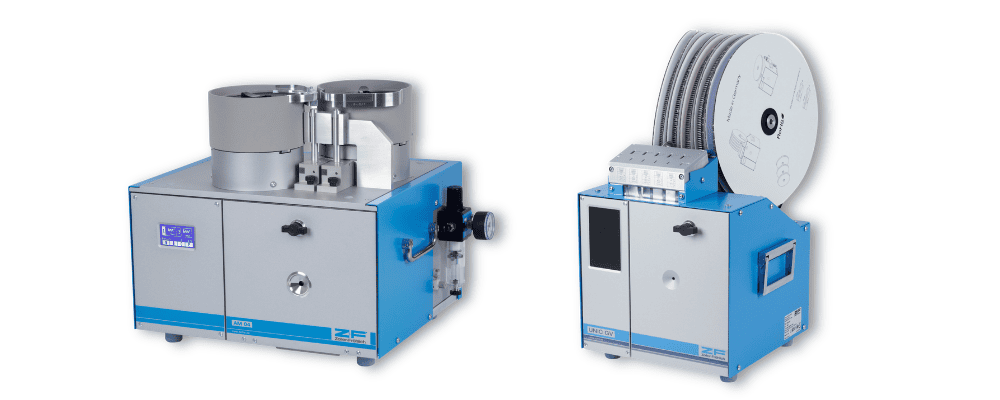
Consider stripping and crimping. The Z+F UNIC-GV Universal Stripper-Crimper processes Z+F ferrules on reel from 0.5 to 2.5 mm² (AWG 20-14) without requiring a tool change. For an operation processing different wire sizes throughout the day, eliminating repeated tooling changes can help maintain flexibility while reducing setup and handling.
For larger ferrules, the AM 04 Duomatic Modular Stripper-Crimper offers another approach. It is designed to process insulated ferrules from 4 to 10 mm² (AWG 12-8), with two cross sections set up simultaneously so operators can switch between them at the touch of a button.
These are examples of automation that does not require committing to a fully automated line. A manufacturer can target a repetitive process, reduce operator touch time, and still accommodate changing production requirements.
Reduce the Cost of Frequent Change
High-mix production introduces another challenge: changeovers.
Different jobs can require different wire sizes, lengths, ferrules, contacts, and processing parameters. When those requirements change frequently, setup time becomes part of the productivity equation. The answer is not necessarily more automation. It is more adaptable automation.
A manufacturer may automate stripping and crimping first because that process creates a bottleneck. Another may discover that measuring, feeding, and cutting wire is consuming more operator time.
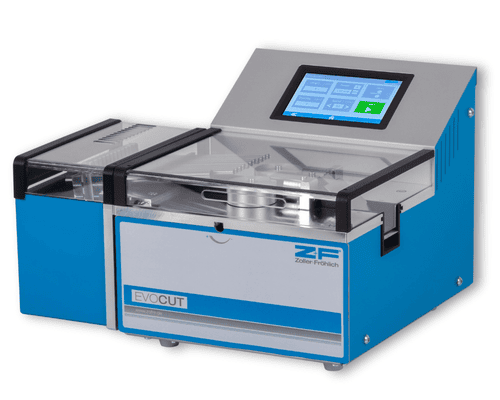
For the latter, equipment such as the Z+F EVOFEED® and EVOCUT® can automate wire feeding, measuring, and cutting. Instead of manually selecting lengths and cutting each wire, these steps can become part of a controlled process while the rest of production remains flexible.
Rather than asking, “How do we automate everything?” manufacturers can ask, “Which manual steps are slowing us down the most?”
That change in perspective makes automation much more accessible to high-mix operations.
Connect the Steps Where It Makes Sense
Selective automation can also grow as production requirements change.
Individual processes can be automated first, while a more integrated solution may make sense when several repetitive steps begin limiting throughput.
Z+F's Wire Processing Center (WPC) demonstrates what that next level can look like. The system combines the EVOFEED® multi-feeder and EVOCUT® for wire feeding and cutting, a UNIC-GV stripper-crimper for ferrule processing, and a MultiMark thermal transfer printer for labeling. WPC software is also compatible with EPLAN and other CAE files.
The important point for a high-mix manufacturer is not that every operation needs this level of automation. It is that automation can scale with the process.
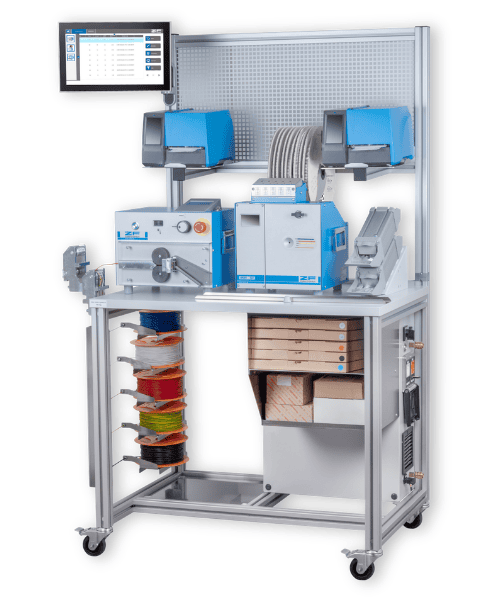
A stand-alone stripper-crimper may address today's primary bottleneck. Automated feeding and cutting may be the next logical step. For operations where multiple manual steps are creating delays, connecting those functions can create a more efficient workflow.
Build Automation Around Your Operation
There is no production-volume threshold that suddenly makes automation worthwhile.
For a high-mix, low-volume manufacturer, the opportunity may be found in reducing repetitive labor, simplifying setup, improving crimp consistency, eliminating unnecessary handling, or giving skilled operators more time to focus on higher-value production tasks.
Start by looking closely at the current process.
Where are operators spending the most time? Which steps are repeated most frequently? Where do changeovers create delays? Which processes depend most heavily on manual consistency? Where does work begin to accumulate?
Then match the equipment to the problem.
Z+F USA provides solutions ranging from individual cutting, stripping, and crimping machines to integrated wire processing systems, giving manufacturers the ability to automate at the level that makes sense for their operation.
High-mix manufacturing does not have to choose between flexibility and automation.
With the right equipment in the right places, manufacturers can preserve the flexibility their production demands while reducing touch time, improving repeatability, and getting more finished work through the operation.