In industries such as construction, energy, and infrastructure, accurate data is the foundation of every decision. Laser scanning has emerged as a critical tool for capturing this data. Yet, not all scanners are created equal. The choice of equipment can determine whether a project proceeds smoothly or encounters costly setbacks.
The question is simple: why invest in advanced laser scanning technology? The answer lies in reliability, precision, and total cost of ownership.
The Growing Importance of Scanning
As projects become more complex, the need for precise measurements increases. Laser scanners provide detailed 3D representations of environments, enabling engineers and planners to make informed decisions. However, the value of scanning depends entirely on the quality of the data collected. Inaccurate or incomplete scans can lead to errors in design, misaligned installations, and rework in the field.
Advanced scanners address these challenges by delivering high-resolution data with minimal noise. They also offer faster acquisition times, reducing the duration of fieldwork and minimizing disruptions.
A Day in the Life: When the Wrong Tool is Chosen

Consider Sarah, a project manager overseeing a large industrial retrofit. Her team is responsible for capturing as-built conditions before installing new equipment. To reduce upfront costs, the company opts for a low-cost scanner. On paper, it meets the basic requirements. In practice, it introduces a series of challenges.
The device is difficult to calibrate. The interface is unintuitive. Support is limited. During the first day on site, the team struggles to obtain consistent scans. Data gaps appear in critical areas. By the second day, the situation worsens. The scanner experiences technical issues, forcing the team to pause work. Subcontractors are delayed. Schedules begin to slip.
Ultimately, Sarah makes the decision to reschedule the scanning phase. The project incurs additional costs—not just for labor, but for equipment rentals and contractual penalties. The initial savings from choosing a cheaper scanner are quickly overshadowed by the downstream impact.
The Hidden Costs of Inadequate Tools
What Sarah experienced highlights a common misconception: that scanning equipment is a commodity.
In reality, the differences between entry-level and advanced systems are significant. Low-cost scanners often lack robustness. They may perform adequately in controlled environments, but struggle in real-world conditions. Limited support exacerbates the issue, leaving teams without assistance when problems arise. Maintenance is another factor. Advanced systems are designed for longevity, with service networks that ensure uptime. Cheaper alternatives may require frequent repairs, leading to downtime and additional expense.
Finally, there is the issue of usability. Complex or poorly designed interfaces slow down workflows and increase the likelihood of errors. In time-sensitive projects, this can have cascading effects.
The Guide: How Z+F USA Delivers Reliability
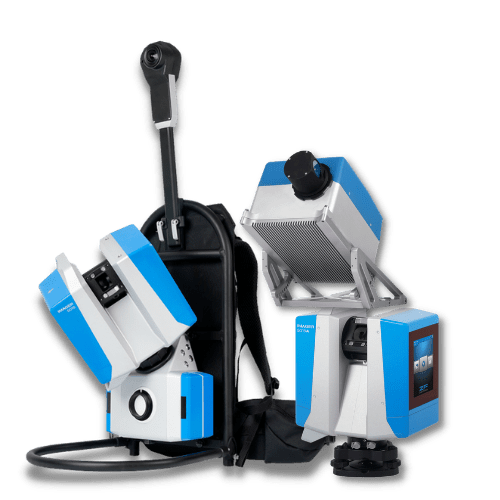
Z+F USA approaches laser scanning with a focus on performance and dependability. Our advanced 3D Laser Scanners and 2D Profilers are engineered to deliver consistent, high-quality data in a variety of environments. These systems include our Z+F IMAGER® 5024, FlexScan 22® SLAM scanner, and Z+F PROFILER® 9025.
Ease of use is a key consideration. Intuitive interfaces and streamlined workflows enable teams to operate efficiently, even under pressure. Training requirements are minimized, allowing organizations to deploy resources quickly. Support is another differentiator. We provide comprehensive service, ensuring that users have access to expertise when they need it. This reduces the risk of downtime and enhances overall productivity.
Most importantly, Z+F USA systems are built for integration. Data can be seamlessly incorporated into your existing workflows, from design software to project management platforms. This ensures that the value of scanning extends beyond data collection to actionable insights
The Transformation: From Uncertainty to Confidence
With the right tools in place, Sarah’s experience changes dramatically. Fieldwork becomes predictable. Data quality improves. Teams can rely on the information they collect, enabling better decision-making. Projects stay on schedule. Costs are controlled. Stakeholders gain confidence in the process.
Sarah is no longer dealing with unexpected disruptions. Instead, she is managing a well-orchestrated operation, where technology supports rather than hinders progress.
Conclusion
Advanced laser scanning is not a luxury—it is a necessity in modern project environments. The choice of equipment has far-reaching implications, affecting not only data quality but also timelines, costs, and overall project success.
Organizations that invest in reliable, high-performance systems position themselves to execute with confidence. Those that prioritize short-term savings risk long-term consequences.
In the end, the true value of advanced scanning lies not just in the data it produces, but in the certainty it provides.